
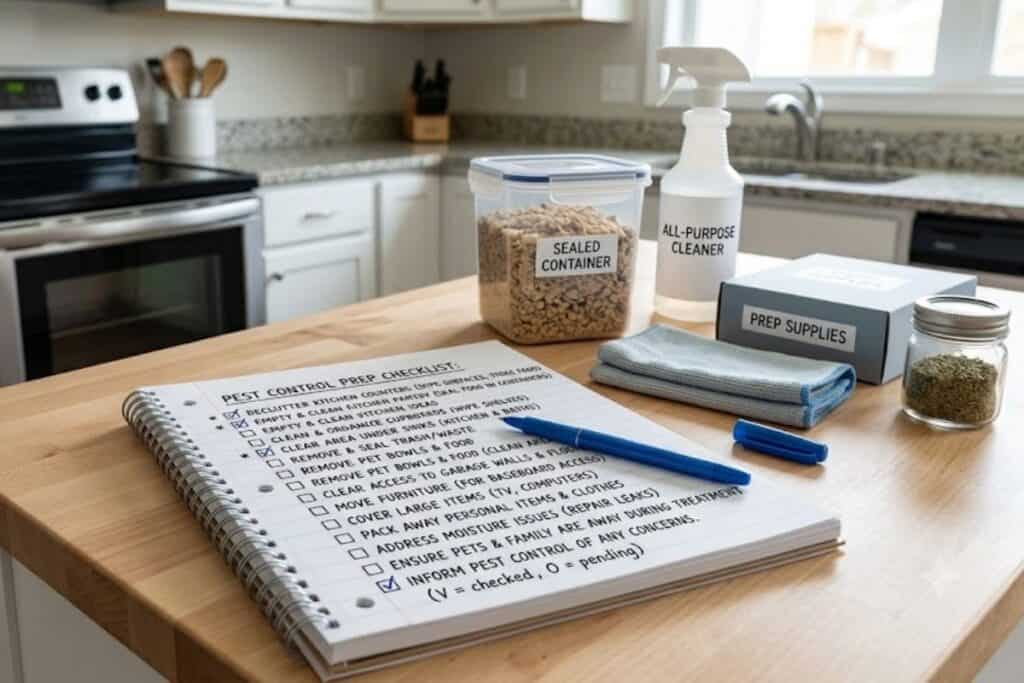
Introduction
Most homeowners assume pest control is entirely the exterminator’s job. Book the appointment, let them spray, and all done. But this assumption costs you: lost treatments, repeat infestations, and wasted dollars. Research shows that poor pre-treatment prep is one of the top reasons pest control treatments don’t produce long-term results. Cockroaches re-emerge from untreated wall voids. Fleas hatch in carpet fibers that the chemical never reached. Ants return through door gaps nobody sealed. The infestation you thought was handled comes back worse, and the window to control it cheaply has already closed. Long Pest Control has seen firsthand what separates a one-time fix from permanent relief, and it starts well before our technicians arrive.
This pest control guide covers every critical step of pest control preparation, room by room, inside and out, so your treatment works the first time, and the results actually hold.
Whole Home General Preparation Checklist
Your technician can only treat what they can access. Clutter, sealed-off corners, and inaccessible appliances create dead zones where pests continue breeding undisturbed. Before any service, the following must be done throughout the entire home:
- Remove all loose items from the floor, shoes, toys, boxes, and clothing, and move them onto furniture or countertops.
- Pull large appliances like refrigerators, washers, and dryers at least a foot away from the wall.
- Vacuum all carpeted surfaces thoroughly, paying close attention to baseboards, under furniture, and inside closets.
- Damp mop all solid floors, working especially along edges and corners where pest activity tends to concentrate.
- Trim shrubs and tree branches back at least 6 inches from your roofline and siding.
- Keep firewood piles away from exterior walls, and check every exterior door for gaps at the base.
The last point is more important than most people realize. If you can see light under the door, you can see an insect crawling.
Did you know? A cockroach can reduce its body profile to move through a gap as thin as 3mm, roughly the width of two stacked quarters. If your doors aren’t sealed, no treatment fully works.
Kitchen Pest Control Preparation Checklist
Clear Everything Out, And We Mean Everything
The kitchen demands the most thorough pest treatment preparation in the entire home. Pests don’t just live in your cabinets; they build nests behind the refrigerator, breed under the stove drawer, and hide along plumbing lines under the sink.
- Remove all food, dishes, pots, pans, towels, and utensils from every kitchen cabinet and drawer; nothing stays on countertops or in sinks.
- Pull the refrigerator out at least one foot and clean behind it; leave it out for treatment access.
- Remove the bottom oven drawer, clean the area beneath it, and leave both out.
- If ant or cockroach activity has been noticed under the sink, clear that cabinet completely.
Kitchen Preparation Before Pest Control
Throw away any dry goods showing signs of infestation; cereals, flour, grains, and spices are the most common hosts for stored food pests. Everything else is put in sealed glass or plastic containers before the technician arrives. Leaving open packaging in your pantry isn’t just a health risk; it’s actively inviting reinfestation after treatment is done.
Bedroom and Living Area Preparation
Bedrooms feel safe, but they usually aren’t. Fleas survive deep in carpet fibers for weeks after a pet leaves the room. Carpet beetles quietly destroy woolen clothing folded in drawers. Spiders nest undisturbed in closet corners for months without a single sighting.
Move all furniture at least 2 feet from the walls. Remove everything from under beds and inside bedroom closets, and vacuum those areas thoroughly, including every crack and crevice. Inspect all woolens, cottons, and furs for carpet beetle damage. Dry clean any affected items or tumble them in a dryer on high heat for at least 30 minutes. Disconnect smoke alarms before treatment begins, and don’t reconnect them until the technician confirms the space is clear.
| What You Skip | What Survives |
| Vacuuming under beds | Flea larvae deep in carpet fibers |
| Pulling furniture from walls | Spider egg sacs along baseboards |
| Checking woolen clothing | Active carpet beetle colonies |
| Clearing closet floors | Undisturbed cockroach harborage zones |
Outdoor Preparation for Pest Control
Outdoor prep is where most homeowners cut corners, and where re-infestations silently begin. No interior residential pest control treatment holds if the exterior remains untreated and unmanaged.
- Trim all shrubs, bushes, and tree branches at least 6 inches back from your home’s exterior and roofline.
- Move firewood piles away from the foundation; pests nest in stacked wood and migrate indoors when temperatures drop.
- Remove old bird or bee nests from attic spaces and crawl areas before treatment; if they’re inaccessible, inform your technician in advance, as it directly affects the treatment approach.
- Clear leaf debris and organic matter from around the foundation. Decomposing material offers an ideal environment for moisture-loving pests such as termites and silverfish.
- Seal any visible cracks or gaps along the foundation and around exterior door frames.
These aren’t just pest prevention tips; they’re structural decisions that determine whether your home stays pest-free long after the treatment dries.
Safety Measures During Pest Control Treatment
Pest control safety tips aren’t suggestions; they’re non-negotiable. All people and pets must vacate before treatment begins, and the required time away depends on what’s being treated.
| Treatment Type | Required Vacate Time |
| General pest / spider | 2 hours minimum |
| Flea treatment | 4 hours, or until carpets are fully dry |
| Cockroach / stored food pests | 4 hours minimum |
| Carpenter / house ant | 2 hours post-treatment |
Persons with respiratory conditions or medical sensitivities are advised to consult their physician prior to the scheduled service. Safety Data Sheets available on request. Aquariums and fish bowls can stay, but keep them off the floor and covered with a towel.
What to Do After Pest Control Treatment
The Step Most Homeowners Get Wrong
Re-entry doesn’t mean reset. The most damaging thing you can do after a professional pest control service visit is to clean too aggressively. Cleaning baseboards, crevices, and cabinet corners right after treatment removes the chemical residual your technician diligently applied and undoes the entire service.
Wipe countertops and cabinet interiors before returning items, but leave baseboards, under-sink crevices, and cabinet cracks completely untouched. For flea treatments, avoid damp mopping hard floors for at least two weeks. Vacuum the entire home 24 hours after a flea service. This triggers hatching and drives fleas directly into contact with the residual, accelerating control significantly. Increased pest activity in the days following treatment is normal; it means pests are being flushed out, not that the treatment failed.
Common Mistakes Homeowners Should Avoid
Skipping prep doesn’t just reduce effectiveness; it can void the service entirely. Technicians may decline to treat a home that isn’t prepared, and a return visit may come with additional charges.
The most damaging mistakes aren’t always the obvious ones. It’s not leaving out a dish or forgetting to vacuum one room. It’s cleaning too aggressively after treatment, returning home before chemicals dry, or letting pets back in before the required wait time has passed. It’s not considering the outdoor perimeter that’s really important. And not treating pets for fleas while treating the home, which almost guarantees reinfestation within days, no matter how thorough the interior treatment was.
Follow the pest control checklist completely, or the results won’t hold.
Ready to Stop the Infestation for Good?
Preparation makes the treatment work. But the treatment still has to be done right, and that’s where experience matters more than anything else. Every step in this home pest control guide exists because skipping it leads to a predictable outcome: pests return, treatments fail, and the problem compounds into something far harder to fix.
Long Pest Control has been delivering trusted pest management services across Tacoma, WA; Gig Harbor, WA; Federal Way, WA; Puyallup, WA; University Place, WA; Auburn, WA; Lacey, WA; Lakewood, WA; and Olympia, WA since 1979. Our team offers same-day and next-day pest control services, because waiting isn’t an option when your home is already at risk. Whether it’s a flea infestation, a rodent problem, or a preventative quarterly pest management services program, we bring over four decades of hands-on expertise to every job.
Don’t wait until the infestation controls you. Follow these pest control safety tips and pest prevention tips, then call us for the rest. Reach Long Pest Control at +1 253-565-8228 to schedule your service today.
